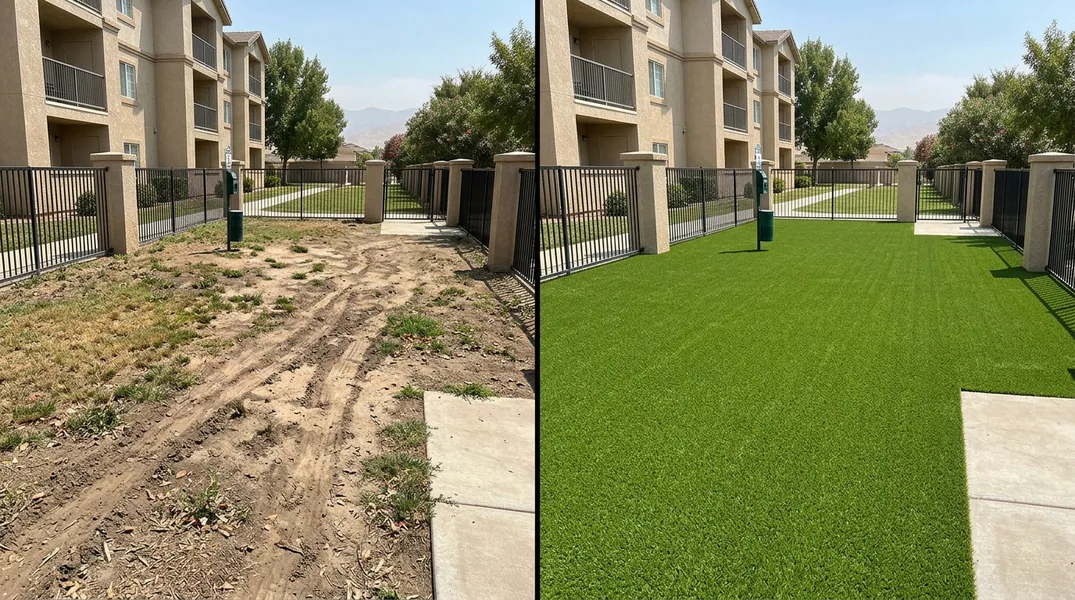
Turf vs Artificial Grass: Understanding the Core Difference
When homeowners in Bakersfield face the decision between maintaining natural turf and installing artificial grass, they're really asking a fundamental question: what does a functional, beautiful yard look like in a water-scarce climate? The distinction between turf and artificial grass goes beyond aesthetics. Natural turf, whether it's a traditional lawn or drought-resistant native grasses, requires consistent watering, seasonal maintenance, fertilizing, and pest management. Artificial grass, by contrast, eliminates watering entirely and reduces the labor involved in upkeep.
The real difference lies in long-term commitment and environmental impact. Natural turf in Bakersfield's hot, dry climate demands significant water resources, especially during summer months when temperatures regularly exceed 95 degrees Fahrenheit. Artificial grass requires an upfront installation investment but delivers predictable, minimal maintenance costs over 15 to 20 years. For homeowners who prioritize water conservation and reduced yard work, artificial grass often makes practical sense. However, natural grass still offers benefits that synthetic options cannot replicate, including soil health, natural cooling, and genuine biodiversity.
Artificial Grass vs Real Grass: The Heat Factor in Bakersfield
One of the most common concerns about artificial grass in Bakersfield is heat retention. Synthetic turf can become uncomfortably warm during peak summer days, sometimes reaching temperatures 20 to 40 degrees Fahrenheit higher than real grass. This happens because artificial grass lacks the evaporative cooling that living plants provide through transpiration. If you have children or pets who spend extended time outdoors, surface temperature matters. Real grass naturally cools itself and the surrounding area through water evaporation, making it more comfortable underfoot during scorching afternoons.
Modern artificial grass products have improved significantly in recent years. Premium turf options now include cooling technologies and lighter color formulations that reflect more heat and absorb less solar radiation. Some installations incorporate shade structures or strategic landscaping to mitigate temperature issues. If heat concerns you, discussing these options with a professional installer is essential. Residential Artificial Grass Installation specialists can recommend products and placement strategies that minimize thermal buildup while maintaining the durability and low-maintenance benefits you're seeking.
PFAS in Artificial Grass: Safety Concerns Worth Understanding
PFAS, or per- and polyfluoroalkyl substances, are synthetic chemicals used in some artificial grass products to enhance durability and stain resistance. These so-called 'forever chemicals' persist in the environment and have raised health concerns in recent years. Some studies suggest potential links between PFAS exposure and health issues, particularly in children and pets who have direct contact with contaminated surfaces. If you're considering artificial grass for a yard where children or pets spend significant time, this is a legitimate factor to investigate.
The good news is that not all artificial grass contains harmful levels of PFAS, and manufacturers have become increasingly transparent about their formulations. When evaluating Residential Artificial Grass Installation options, ask your installer about PFAS content and request product safety certifications. Reputable companies can provide documentation showing that their turf meets environmental and health standards. This is one area where doing your homework upfront pays dividends. Request a free estimate and use that conversation to ask detailed questions about product composition and safety testing.
Xeriscaping and Drought-Tolerant Landscaping: A Middle Ground
For homeowners hesitant about artificial grass but committed to water conservation, xeriscaping offers a compelling alternative. Xeriscaping is a landscaping philosophy centered on minimizing water use through smart plant selection, efficient irrigation, and thoughtful design. In Bakersfield's climate, drought-tolerant landscaping can look beautiful and vibrant without the environmental footprint of traditional turf or the concerns associated with synthetic materials.
Drought-tolerant landscaping typically incorporates native plants, mulch, hardscaping elements like gravel or pavers, and strategic grouping of plants by water needs. Desert-adapted plants such as Texas privet, California buckwheat, and various cacti and succulents thrive in Bakersfield's conditions while requiring minimal supplemental irrigation once established. This approach supports local ecosystems, requires less maintenance than traditional lawns, and delivers genuine environmental benefits. The tradeoff is that you're not getting the soft, walkable surface that grass (real or artificial) provides. Many homeowners find a hybrid approach works best: combining a smaller area of artificial grass for usable outdoor space with surrounding drought-tolerant plantings.
Residential Artificial Grass Installation Cost in Bakersfield: What to Budget
Understanding the financial commitment involved in artificial grass installation helps homeowners make informed decisions. Pricing for Residential Artificial Grass Installation varies based on yard size, existing ground conditions, turf quality, and additional features like drainage systems or infill materials. In general, homeowners should expect to invest between $8 and $18 per square foot for professional installation, though premium products and complex installations may cost more. For a typical residential yard of 500 to 1,000 square feet, total costs typically range from $4,000 to $18,000.
While this initial investment is significant, the long-term savings often justify the expense. Over 15 to 20 years, you eliminate water bills, reduce equipment maintenance, skip chemical treatments, and minimize labor. Many homeowners recoup their investment within 5 to 7 years through water savings alone, particularly in water-conscious regions. When comparing artificial grass vs real grass over a decade, the total cost of ownership typically favors synthetic turf. To get an accurate estimate tailored to your specific property, contact Bakersfield Turf Installation at (661) 387-2401 or request a free estimate online. Our team can assess your yard and provide transparent pricing based on your needs and preferences.
Making Your Decision: Is Artificial Grass Right for Your Bakersfield Home?
Choosing between artificial grass, natural turf, and drought-tolerant landscaping ultimately depends on your priorities, budget, and lifestyle. If water conservation is your primary concern and you're willing to embrace a different aesthetic, xeriscaping delivers genuine environmental benefits. If you want a low-maintenance, green surface for your family to enjoy year-round, artificial grass provides durability and convenience, though heat and PFAS concerns deserve careful consideration. If you value natural ecosystems and can commit to seasonal maintenance, quality natural grass remains a viable option, even in Bakersfield's challenging climate.
Many homeowners find that a combination approach works best. For example, Pool Surround Turf or Pet Turf & Dog Run Installation delivers practical benefits in high-traffic areas while surrounding plantings provide visual interest and environmental value. Whatever you decide, the team at Bakersfield Turf Installation is here to help. We specialize in professional installation and can answer your specific questions about heat performance, product safety, and long-term maintenance. Call us today at (661) 387-2401 to discuss your yard's unique needs and explore the option that's right for your home.
Looking for a professional artificial grass installation company in Bakersfield? Bakersfield Turf Installation responds fast for all your artificial grass installation needs.
Get a Free Quote