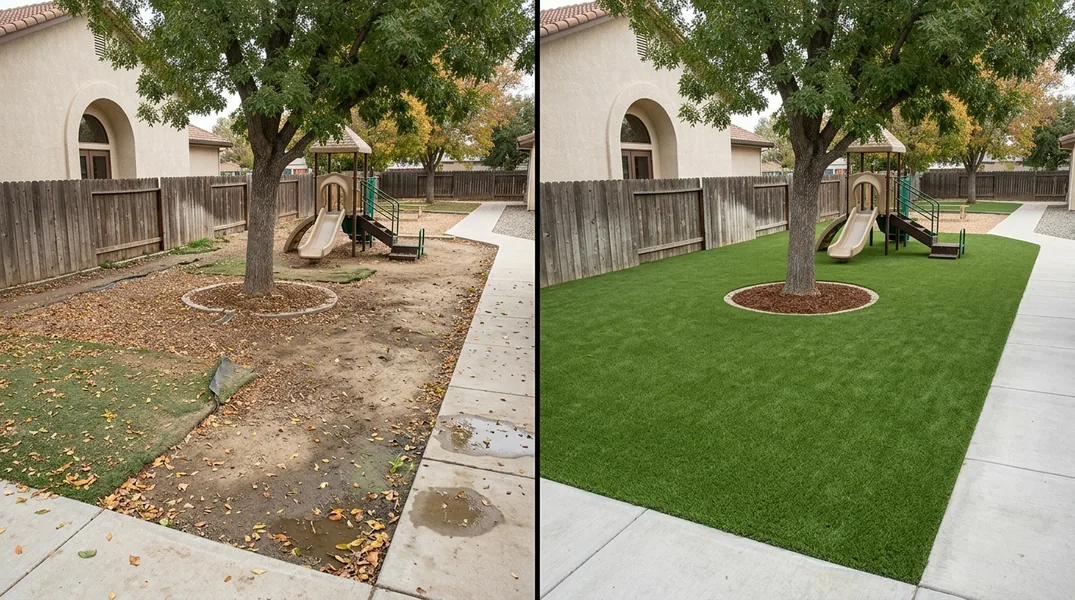
Why Base Preparation Matters in Bakersfield's Unique Soil
Bakersfield sits in a region with distinctive soil challenges that directly impact artificial grass longevity. The area's combination of sandy loam and hardpan creates drainage complications that many homeowners underestimate. When water cannot permeate properly through the soil layers, it pools beneath your turf, leading to mold, odors, and accelerated material degradation. This is why Residential Artificial Grass Installation in our region requires more than simply laying turf over existing ground.
The hardpan layer common throughout Bakersfield acts as a natural barrier that prevents water infiltration. This compacted soil layer, often found 12 to 36 inches below the surface, was formed over centuries and cannot be easily broken through with standard tools. Without addressing this during installation, even the best artificial grass product will fail prematurely. Proper base preparation involves understanding your specific soil composition and designing a drainage system that works with, rather than against, your property's natural conditions.
Understanding What to Put Under Artificial Grass
The foundation beneath your artificial turf is just as important as the turf itself. What to put under artificial grass depends on several factors including your soil type, local climate, and intended use. In Bakersfield, we typically recommend a layered approach starting with proper grading and compaction of existing soil, followed by geotextile fabric, and then engineered base materials. The artificial grass underlay system must allow water to drain away while providing a stable, level surface for the turf to rest upon.
Most professional installations in our area begin with a 2 to 4 inch layer of crushed limestone or recycled asphalt. This base layer provides excellent drainage characteristics and compacts evenly to create a firm foundation. Above that, we place a layer of sand, typically 1 to 2 inches, which helps with final leveling and minor water distribution. The geotextile fabric sits between the soil and these engineered layers, preventing soil particles from migrating upward while still allowing water to flow downward. For properties with severe hardpan issues, we may recommend removing or breaking through the hardpan layer entirely, which adds to the project scope but ensures long-term success.
Artificial Grass Drainage Systems: The Critical Component
Artificial grass drainage is perhaps the most overlooked aspect of residential installations, yet it determines whether your investment thrives or fails. In Bakersfield's climate, where summer heat is intense and winter rains can be sudden, a properly designed drainage system prevents water from pooling and creating conditions for mold and bacterial growth. The drainage system must work in two directions: allowing water to permeate through the turf fibers and then directing it away from the installation area entirely.
French drains or perimeter drainage channels are often necessary for larger installations or properties with poor natural slope. These systems collect water at the edges of your turf area and direct it toward storm drains or appropriate discharge points. For smaller residential projects, ensuring proper slope (typically 1 to 2 percent grade) combined with a quality sub-base material may be sufficient. We assess each property individually because one-size-fits-all solutions often fail. If your yard naturally collects water or has existing drainage problems, these must be addressed before turf installation begins. Ignoring drainage during the planning phase almost guarantees problems within the first few years.
Turf Base Prep Step-by-Step: What Professional Installers Do
Turf base prep involves a methodical sequence that cannot be rushed. First, we remove existing vegetation and debris, then assess the soil composition and existing drainage patterns. For properties with significant hardpan, we may use specialized equipment to break through or remove this layer. The area is then graded to ensure proper slope away from structures and toward drainage points. This grading step is crucial because even minor deviations can cause water to pool in unexpected locations after installation.
Next comes compaction of the prepared soil base, which must be done carefully to avoid over-compacting and worsening drainage issues. We then lay geotextile fabric across the entire area, overlapping seams by at least 12 inches to prevent soil migration. The engineered base materials (crushed limestone or recycled asphalt) are spread and compacted in layers, with each layer checked for proper compaction and slope. Finally, a sand layer is added and screeded to create a perfectly level surface. Only after all these steps are complete and inspected do we install the artificial turf itself. This methodical approach takes longer than rushing through installation, but it's the difference between turf that lasts 8 to 10 years and turf that fails within 3 to 5 years.
Common Installation Mistakes on Bakersfield Properties
We see several recurring mistakes when homeowners attempt DIY installations or hire inexperienced contractors. The most common is insufficient base preparation, where installers skip proper grading or compaction to save time and money. Another frequent error is using inadequate drainage materials or failing to include any drainage system at all. Some installers also fail to account for Bakersfield's hardpan layer, which can be invisible until water problems emerge months after installation. These shortcuts might save money initially, but they consistently result in costly repairs or complete replacement within a few years.
Another mistake involves improper slope design. We've seen installations where the turf slopes toward a house foundation or toward an area that naturally collects water. Poor edge finishing also causes problems, as water can seep under the perimeter and undermine the entire installation. Additionally, some contractors use inappropriate materials for our climate, selecting sub-base products designed for different regions that don't perform well with Bakersfield's soil and weather patterns. Choosing an experienced local installer familiar with our specific soil conditions and climate patterns prevents these costly mistakes.
Professional Installation Near Me: When to Call Bakersfield Turf Installation
If you're considering artificial grass for your Bakersfield property, professional installation is worth the investment. The complexity of proper base preparation, especially on properties with hardpan or poor existing drainage, requires specialized knowledge and equipment. Bakersfield Turf Installation has years of experience working with local soil conditions and understands the specific challenges that properties throughout our service area face. We've successfully installed artificial grass on countless Bakersfield properties, from small residential yards to large commercial installations.
Whether you're planning Residential Artificial Grass Installation, Pet Turf & Dog Run Installation, or even Pool Surround Turf, proper base preparation is essential to success. We recommend scheduling a free estimate so we can evaluate your specific property conditions, soil type, and drainage needs. Call us at (661) 387-2401 to discuss your project and learn how we can help you avoid the common installation mistakes that plague artificial grass in our region. Our team takes pride in delivering installations that look beautiful and perform reliably for years to come.
Looking for a professional artificial grass installation company in Bakersfield? Bakersfield Turf Installation responds fast for all your artificial grass installation needs.
Get a Free Quote